
Reviewed · CORTINA SKI TRIPS
Ski Tour from Cortina d’Ampezzo: Tofana
Tofana gives you Cortina skiing at its most dramatic: high pistes, sharp Dolomite rock, and runs tied to the 1956 Winter Olympics. In four hours, an English-speaking guide helps you choose terrain that fits your ability instead of sending you blindly toward the steepest slope.
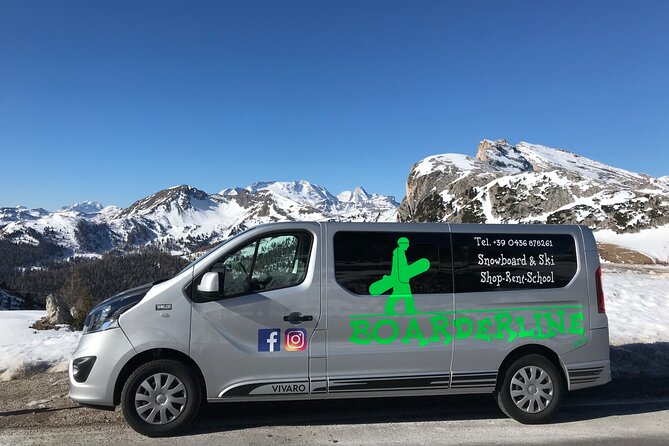
I like the small group size, capped at eight, and the practical transport from Cortina. I also like the chance to stop at mountain huts, including the Duca d’Aosta refuge, where the 1956 Olympic flame was kept before the opening ceremony. The main catch is price: at $361.23 per person, you still pay separately for the ski pass, food, and drinks.
Key points to know
- Tofana’s Olympic runs: Ski Pista Olympia, Pista Vitelli, or Pista a Col Druscie when conditions and ability allow.
- Terrain for several ability levels: Lower pistes suit beginners, while Ravalles, Pomedes, Canalone, Labirinti, and Vertigine Bianca challenge advanced skiers.
- Four hours with a guide: The short format works well for orientation, coaching, and focused skiing rather than an all-day ski safari.
- Small maximum group: With no more than eight participants, the guide should have a fair chance to adjust the outing to the group.
- Mountain-hut break: Plan to pay your own way for food and drinks, perhaps including Cortina’s Olympic-themed Olympia dish.
- Morning or afternoon option: Morning customers receive hotel pickup, while afternoon customers are returned to their hotel.
What the four-hour Tofana tour is really about
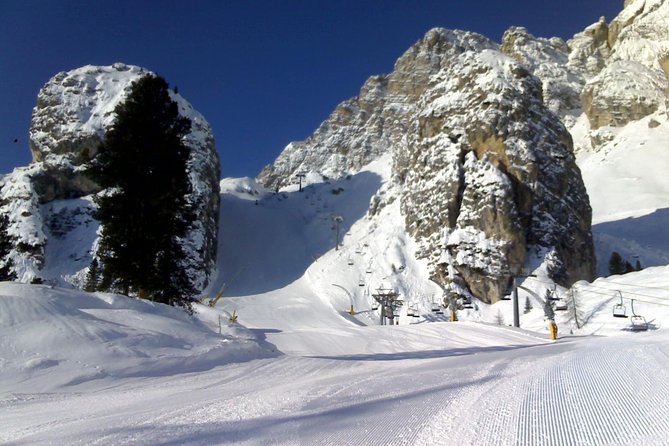
This is not a beginner ski lesson with a fixed practice slope, and it is not simply a ride to the lift followed by free time. The point is to let a local guide shape a half-day around Tofana, one of Cortina’s most varied ski areas.
You meet at Socrepes, or use the stated hotel arrangement for your selected time. The tour includes transport in an air-conditioned vehicle, then your guide chooses the appropriate gondola or cable car after considering your ability. That assessment matters here. Tofana has easy lower runs, demanding red pistes, and serious black terrain. A good guide can keep the group skiing safely and productively instead of wasting time on slopes that are too easy or too hard.
The tour is offered in English and has a maximum of eight people. That is small enough to feel more personal than a large ski-school group, though the actual pace will still depend on the ability mix. If one person is comfortable on steep black runs and another is still finding confidence on blue pistes, the guide must balance the day carefully.
You can choose a morning or afternoon departure. The morning tour includes hotel pickup in Cortina, while the afternoon tour ends with a hotel return. The published meeting point is Socrepes, so check the exact arrangement at booking rather than assuming every departure includes door-to-door pickup.
More ski trips around Italy:
- Private Ski Lessons in Livigno, Italy
★ 5.0 · 85 reviews - Lessons in Mini-Group – 3 hours a day – skiing
★ 5.0 · 22 reviews - Lessons in Mini-Group – 2 hours a day – Skiing
★ 5.0 · 18 reviews
Socrepes is your gateway to Tofana
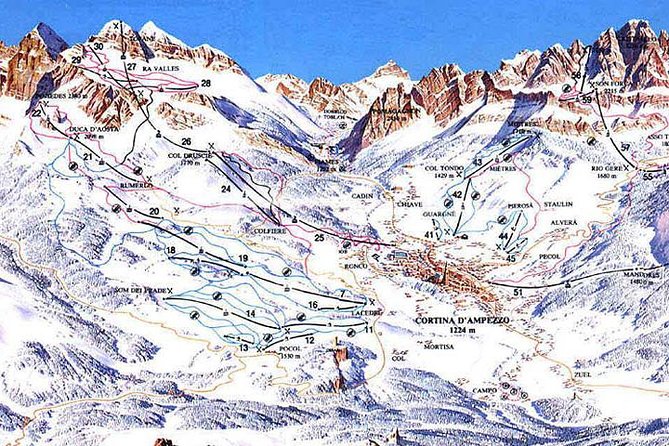
Socrepes sits at the practical lower end of the Tofana ski area. From here, lifts open the route toward higher ground and a much bigger choice of pistes.
For less confident skiers, the lower slopes offer a gentler start. This is useful if you need to warm up, are skiing after a long break, or want the guide to watch your technique before moving higher. You do not need to prove anything in the first run. A guide can use those early turns to judge speed control, stopping, and comfort on steeper ground.
Stronger skiers can use Socrepes as a launch point for the upper lifts. The Tofana Express and connecting lifts lead toward the Duca d’Aosta and Pomedes areas. The route described by skiers familiar with the area includes blue connections and several chairlifts, so the tour is not just one downhill run repeated from the same station.
The practical limitation is time. Four hours sounds generous, but lift rides, meeting arrangements, equipment checks, and a hut stop all use part of it. You will see a useful section of Tofana, not every corner of the full Cortina ski network.
Olympic pistes with real local context
Cortina hosted the 1956 Winter Olympics, and Tofana still gives you the chance to ski runs linked to those Games. The event was the first Winter Olympics broadcast on television, which adds a neat piece of sports history to the day.
The named Olympic routes offer different kinds of skiing. Pista Olympia is the downhill run. Pista Vitelli is associated with giant slalom, while Pista a Col Druscie served as a slalom course. These names are more than decoration. They help you understand why Tofana feels more serious than a small resort built only for relaxed cruising.
Your guide may take you onto these courses if your level and conditions allow. The steep sections demand attention, especially for skiers who are used to broad, forgiving pistes. I would treat the Olympic label as a reason to respect the run, not as a challenge to race it. The guide’s role is to show you the terrain and offer useful tips, not push you into a run that is beyond your control.
For intermediate skiers, the value comes from learning how the mountain is arranged and improving your line choice on more demanding red pistes. For advanced skiers, the Olympic routes provide a proper test without requiring a separate full-day itinerary.
Pomedes and the high Dolomite views
Pomedes is one of the tour’s strongest draws. The upper section gives advanced skiers access to fast slopes toward Rumerlo, with rock formations rising around the pistes. The views are part of the experience, but you need to remember that the best viewpoints often come with steeper skiing.
The route from Pomedes toward Rumerlo can feel quick and exposed compared with the lower runs. It is not the place to experiment with parallel turns for the first time. If you ski confidently on red and black pistes, you may appreciate the speed and changing terrain. If you are an intermediate skier who prefers a steady rhythm, ask the guide to keep the route within your comfort zone.
The surrounding Dolomite peaks give the day its visual punch. You ski above the Cortina valley, with pale rock walls and high mountain shapes framing the pistes. Weather will affect how much you see, so the scenery should be viewed as a bonus rather than a guarantee. Fresh snow can improve the skiing, but poor visibility can make route-finding and slope choice more important.
One local account describes fresh snow making the Olympia delle Tofane descent a serious challenge for strong telemark skiers. That detail is useful even if you ski ordinary alpine turns: snow conditions can change the character of a run quickly. A piste that feels manageable in firm, groomed conditions may demand far more control after snowfall.
Same mountains, a different way to spend the day:
- Private Snowboard Lessons
★ 5.0 · 14 reviews - Dolomiti Ski Tour: Super 8 Lagazuoi and 5 Torri from Cortina d’Ampezzo
★ 4.0 · 7 reviews - Sellaronda Ski Tour
★ 4.5 · 6 reviews - Alleghe: Ski Private Lessons
★ 4.7 · 5 reviews
Duca d’Aosta: the best place for a pause
A stop at the Duca d’Aosta mountain refuge gives the tour a welcome human scale. The refuge is known for housing the 1956 Olympic flame before the opening ceremony, so it connects the ski day with Cortina’s past without turning the experience into a museum visit.
This is also where the practical side of the tour becomes clear. Food and drinks are not included, so bring money for a refreshment stop. You might sample the Olympia dish, a local specialty linked to the resort’s Olympic heritage, but the meal is optional and at your own expense.
A hut pause can be especially helpful in a four-hour tour. It gives you time to warm up, discuss the next runs, and ask the guide for advice. It also prevents the outing from becoming a rushed sequence of lift queues and descents.
Do not expect a long restaurant lunch if you want to make the most of the skiing. A short drink or snack fits the schedule better. If a full meal is important to you, ask how much time the guide plans to spend at the refuge before ordering.
Ravalles, Canalone, and the serious stuff
Higher Tofana offers more than scenic cruising. Ravalles has demanding pistes, and the listed expert challenges include Canalone, Labirinti, and Vertigine Bianca.
The Canalone and Labirinti runs are for skiers who already manage steep terrain with confidence. Their names may sound playful, but they are not gentle sightseeing routes. The local description of this part of Tofana stresses strong gradients and the need to stay focused. That is sound advice.
Vertigine Bianca deserves special attention. It is one of only two Cortina slopes not groomed by snowmobiles, allowing fresh snow to remain in a more natural state. The result can be a thrilling, low-impact run with excellent snow feel, but it is not a sensible choice for someone still learning to handle uneven or ungroomed conditions.
The word eco-friendly does not mean easy. A zero-impact grooming approach does not remove the technical demands of the slope. You need solid control, suitable conditions, and a guide who will make a careful call. If the run is not appropriate that day, there are plenty of other options.
The long descent toward Cortina
One of the area’s biggest vertical outings starts high, near 2,850 meters, and drops toward Cortina at about 1,217 meters. The full descent can include Forcella Rosa, with a reported maximum gradient of 61 percent.
That is an impressive route, but it should not be treated as the default target for every participant. A four-hour tour may include part of this vertical journey, depending on the group, lift timing, snow, and the guide’s judgment. Forcella Rosa and similar black terrain are for advanced skiers who stay calm on steep pitches.
This is where the guide adds the most value. A map can show you a run, but it cannot tell you how the snow feels that day or how much energy you have left after several demanding descents. The tour is strongest when the guide uses local judgment rather than trying to tick off every famous name.
Guide quality matters more than the lift route
The best part of a guided ski tour is not the transport. It is the human judgment between runs.
Lino is singled out for strong instruction, local knowledge, and genuine attention to people on the mountain. His habit of greeting former students and checking on them gives you a sense of a guide who is connected to the Cortina ski community. Mary is also described as a friendly guide with a strong understanding of the mountain and nearby area.
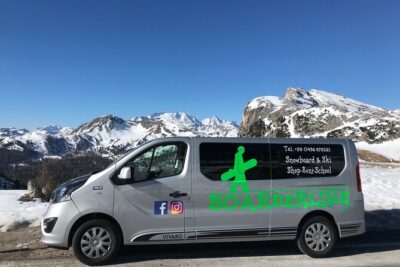
Those details matter because Tofana is not a simple beginner hill. You want someone who can explain where to go, identify the right run for your ability, and offer technique tips without turning the day into a rigid lesson. The provider, Centro Boarderline, also handles ski equipment and apparel through its Cortina operation, with staff praised for helpful rental advice and restaurant suggestions.
The tour itself does not include ski equipment, so arrange rentals separately if needed. The equipment service associated with the provider can be useful, but confirm exactly what you are booking and what it costs.
Price, ski pass, and the real value
At $361.23 per person, this is a premium half-day activity. The price includes the guide and transport, but not the ski pass, food, or drinks. That means your final cost will be higher, especially if you need rentals as well.
The value depends on how much you want local direction. If you already know Cortina well, ski confidently, and are happy choosing lifts and routes yourself, buying only a pass may be better value. You can spend the full day skiing rather than limiting yourself to four guided hours.
I see stronger value for visitors with limited time, families or friends with mixed ability, and skiers who want to reach the right part of Tofana without losing half a morning to route planning. A guide can also help you avoid an expensive mistake: taking a lift toward terrain that is too hard, or spending the best snow on pistes that are too easy.
Group size affects the calculation. With a maximum of eight, you are not paying for a private guide, but you should receive more attention than in a large lesson. Ask yourself if that personal direction is worth the premium on top of the pass.
Who should book this tour
I would recommend it most strongly to intermediate and advanced skiers who want to understand Tofana quickly. You get Olympic history, high Dolomite scenery, demanding pistes, and a guide who can suggest the right progression.
Beginners can participate because the lower areas include gentler pistes, but the experience may not feel like a standard beginner lesson. If you have never skied before, ask directly about the day’s terrain before booking. The tour description says most participants can take part, but Tofana’s upper runs are clearly aimed at stronger skiers.
It also suits a small group that wants a shared outing without committing to a full day. The morning departure makes sense if you want the rest of the day free. The afternoon option is useful if you have morning plans and appreciate a hotel return afterward.
I would be cautious if your main goal is powder skiing, a full-day mountain circuit, or a cheap lift-based experience. Conditions vary, and the tour cannot promise Vertigine Bianca, deep fresh snow, or every Olympic run.
Practical details before you book
The tour lasts about four hours and operates with morning or afternoon choices. Morning customers are picked up in their hotel lobby, while afternoon customers are brought back to their hotel. The stated meeting point is Socrepes in Cortina d’Ampezzo, so confirm the exact pickup details after booking.
Confirmation is provided at the time of booking. The activity is near public transportation, and most people can participate. It is offered in English, with a maximum of eight participants.
Cancellation is free up to 24 hours before the start time for a full refund. Changes or cancellations made less than 24 hours before the local start time are not accepted for a refund.
Should you book the Tofana ski tour?
Book it if you want a focused introduction to Cortina’s Tofana area and value a guide’s judgment more than the lowest possible price. The Olympic pistes, Duca d’Aosta refuge, Pomedes views, and range of ability levels give the four hours real substance.
Skip it if you already know Tofana, want a full day on the lifts, or are trying to keep total costs down. Remember that the $361.23 price excludes the ski pass and refreshments.
For the best fit, choose this experience with an intermediate or advanced skier in mind, and tell the guide honestly what terrain you can handle. The smartest day here is not the one with the most famous run names. It is the one that leaves you smiling, challenged, and still in control.
FAQ
How long is the Tofana ski tour?
The tour lasts approximately four hours.
Where does the tour meet?
The stated meeting point is Socrepes, 32043 Cortina d’Ampezzo, Italy.
Is hotel pickup included?
Hotel pickup is included for the morning tour. Customers on the afternoon tour are brought back to their hotel at the end.
Is the ski pass included?
No. The ski pass is not included in the tour price.
Are food and drinks included?
No. Food and drinks are purchased separately.
What language is the tour offered in?
The tour is offered in English.
How many people can join the tour?
The activity has a maximum of eight participants.
Just added around Italy
- Sellaronda ski & Snowboard Tour★ 5.0 · 2 reviews
- Freeride Private Lessons – Skiing★ 5.0 · 2 reviews
- Freestyle Private Lesson – Snowboarding★ 5.0 · 3 reviews
- Hidden Valley Ski Tour★ 5.0 · 2 reviews
- Dolomiti Ski Tour: the Dolomites of Sesto from Cortina★ 5.0 · 2 reviews
- Alleghe: Ski Private Lessons★ 4.7 · 5 reviews
- Dolomiti and First World War Sites Ski Tour from Cortina d’Ampezzo★ 5.0 · 4 reviews
- Dolomiti Ski Tour: Super 8 Lagazuoi and 5 Torri from Cortina d’Ampezzo★ 4.0 · 7 reviews
Cortina Ski Trips, compared.
Dolomiti Ski Tour: Super 8 Lagazuoi and 5 Torri from Cortina d’Ampezzo
Read our review →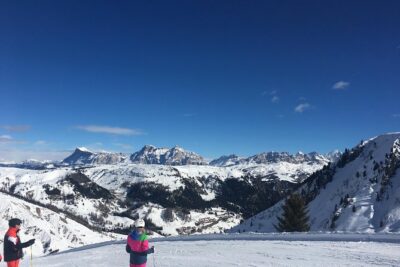
Dolomiti and First World War Sites Ski Tour from Cortina d’Ampezzo
Read our review →
Dolomiti Ski Tour: the Dolomites of Sesto from Cortina
Read our review →Browse the lists this tour appears in