
Reviewed · NATIONAL PARKS
Skiing (Hok Ski) Excursion in Jacques-Cartier National Park
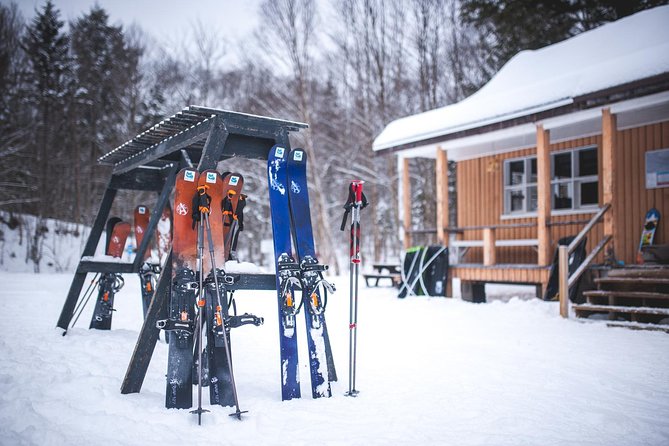
Hok skiing turns a snowy forest outing into something more active than a walk and less technical than downhill skiing. You wear short, wide skis that let you travel through powder, climb gentle slopes, and practice telemark-style descents in Jacques-Cartier National Park.
I like the small-group format, which gives your guide time to fix straps, explain technique, and help when your balance disappears. I also like that lunch and hot chocolate are included, adding a warm break at a refuge rather than sending you back to Quebec City cold and hungry.
The main catch is the effort. This is not a simple snowshoe stroll. Several people found it surprisingly demanding, so you should expect falls, climbs, and a real cardio workout. Good winter clothing and reasonable fitness matter.
Key points to know before booking
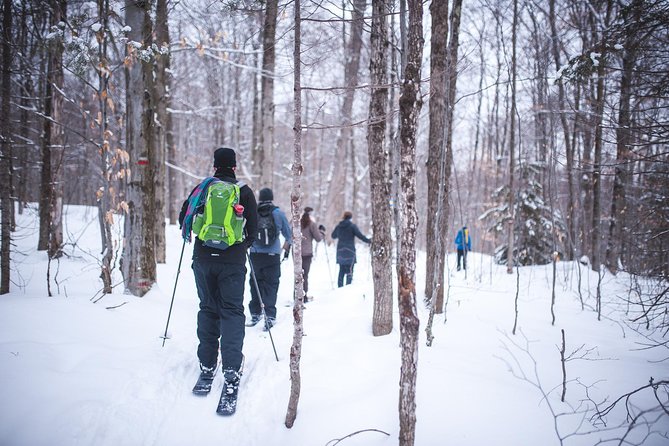
- Hok skiing is not snowshoeing: The activity combines cross-country skiing and snowshoeing, with short skis designed for forest travel.
- The four-hour outing includes instruction: You learn to move, climb, turn, and descend before tackling more technical ground.
- A warm refuge break is built in: Lunch and a hot drink give you time to recover before the return trek.
- Patient guides make a difference: Levi, Lorenzo, Vicky, Alex, Johann, and other guides have helped first-timers and nervous older participants.
- The terrain can be harder than expected: It suits active adults and families with older children better than young children or anyone with mobility limits.
- The price covers the important extras: Equipment, guide, transport, lunch, hot beverage, taxes, and fees are included for $119.14 per person.
What Hok skiing feels like in the Jacques-Cartier forest
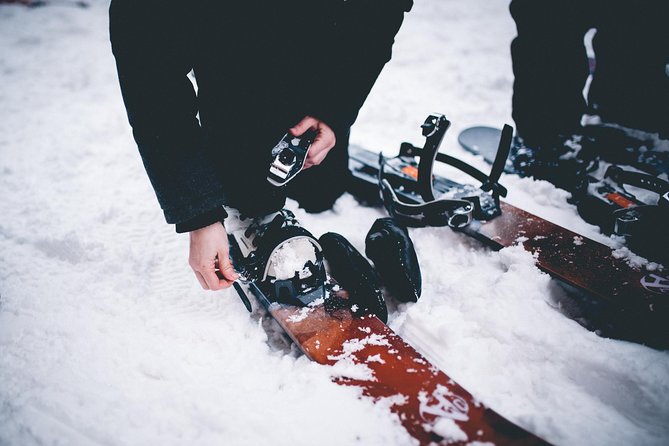
Hok skiing sits between two familiar winter sports. The equipment looks like a short, broad ski with a climbing grip underfoot, allowing you to move across snow without the long glide of classic cross-country skis. The wider shape also gives you more support in forest snow.
That does not make it effortless. You still need to coordinate your feet, poles, balance, and body position. The first part of the outing is used to get comfortable with the gear and learn the basic movement. That teaching time is important, especially if this is your first experience on skis of any kind.
The activity is clearly different from snowshoeing. You are not simply strapping on shoes and walking. You will glide, step, climb, and turn. On descents, you practice a telemark-style position, which can feel awkward at first. Falling is part of the learning process, and you should dress so a tumble in the snow is no big deal.
The reward is access to quiet forest country in Jacques-Cartier National Park. The setting gives the activity its character. You are not circling a flat track beside a city or spending the day on a crowded ski hill. You are moving through a snowy woodland, with opportunities for photographs of the forest and possible wildlife.
More National Park Trips in Canada:
- Jacques-Cartier National Park: Skiing Excursion
★ 5.0 · 22 reviews - Classic Wilderness Skiing in the Pyhä-Luosto National Park
★ 5.0 · 23 reviews - Oslo: Wilderness Skiing Tour with Lunch by the Fire
★ 5.0 · 21 reviews
The 9 a.m. departure from Quebec City
The day begins at 9 a.m. at the Centre Infotouriste de Québec, at 12 Rue Sainte-Anne. Pickup is offered, but the listed meeting point is the tourist information center, so confirm the pickup arrangement after booking rather than assuming hotel collection is included.
Transport is by air-conditioned vehicle. The drive takes you out of Quebec City toward the national park, with arrival scheduled for about 10 a.m. This makes the outing fairly easy to fit into a winter city break. You leave after breakfast and return around 4 p.m., leaving the evening free.
The tour is offered in English. Confirmation is sent within 48 hours, subject to availability. Winter is a busy season, and the operator advises using email or text for questions because phone contact can be difficult during the busiest period.
The advertised group limit is up to 10 people, while the experience is also described as a small group of no more than eight. Either way, this is much more personal than a large coach excursion. A compact group matters here because your guide needs to watch your balance, adjust equipment, and offer individual tips.
Getting set up at 10:30 a.m.
The guided activity begins at about 10:30 a.m. You receive the necessary Hok ski equipment and learn how it works before setting off. Winter clothes are not supplied, so you must arrive with your own coat, hat, gloves, and warm layers.
The suggested clothing list is practical:
- Warm winter coat or jacket
- Hat and gloves
- Several layers
- Hiking boots, leather boots, or sneakers
- Hand and foot warmers, especially in very cold conditions
The hand and foot warmer tip is worth taking seriously. You may be moving steadily, but winter outings still expose your fingers and toes to cold. One pair of warmers in your pocket can make the day more comfortable.
Wear footwear that fits securely and works with the equipment. The operator lists hiking boots, leather boots, or sneakers, but winter conditions can vary. If snow is deep or wet, your warmest suitable boots are the sensible choice.
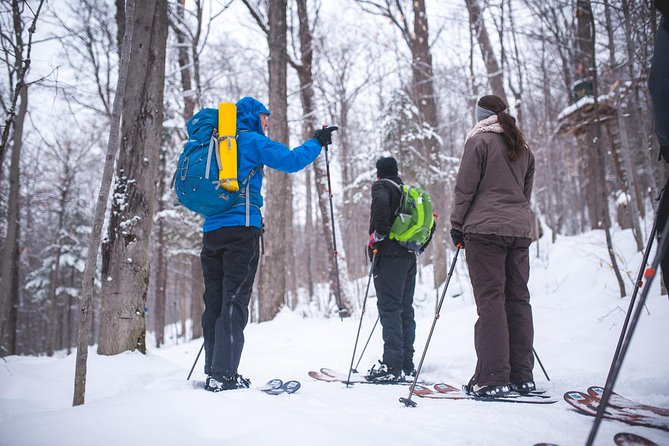
Your guide then demonstrates the basic technique. Beginners need time to understand how to push forward, manage a wider ski, and stay upright. The guide’s patience is one of the strongest parts of this experience. Levi has been praised for helping beginners, while Lorenzo has worked patiently with both first-timers and nervous senior participants. Vicky has also been singled out for helping with buckles, straps, climbs, slips, and falls.
The first kilometres are your practice ground
The opening kilometres are not just a scenic walk. They are your moving lesson. You learn how to travel safely before the route becomes more technical.
Expect a gradual introduction rather than instant speed. You may need to repeat a movement several times before it feels natural. The skis are built for forest travel, but they still require balance. A small slope can feel quite different from level ground.
This is where the small group helps. Your guide can stop to adjust a strap, show you a better stance, or explain why a turn did not work. The pace is intended to help you acquire the technique rather than race through the park.
The physical demand varies with snow conditions, terrain, and your own coordination. Some participants found the outing manageable, while others found it much harder than expected. Both reactions make sense. You do not need advanced ski skills, but you should be ready for sustained movement and some trial and error.
I would not book this expecting a gentle, low-effort family walk. Young children and people with mobility issues may find the activity unsuitable. For an active adult, or a family with older children who are comfortable trying something new, the challenge is part of the appeal.
More ski trips around Canada:
- Whistler Premium Ski Rental Package
★ 5.0 · 55 reviews - Whistler Development Ski Rental Package
★ 5.0 · 48 reviews - Whistler Intro to Backcountry Skiing and Splitboarding
★ 5.0 · 23 reviews - Montreal: Guided Skiing in Quebec Forests
★ 5.0 · 12 reviews
A refuge lunch and hot chocolate break
The route takes you to a refuge for a dinner-style break during the daytime outing. Lunch is included, with a vegetarian option available if you ask after booking. A hot beverage is also provided.
This break gives the schedule a useful rhythm. You spend the first part learning and moving, then get a chance to sit down, eat, and warm up before heading back out. In winter, that pause is more than a meal. It gives tired legs a reset and lets you enjoy the setting without concentrating on every step.
Hot chocolate has been part of the experience, and one guide prepared it during the outing. The exact food and drink details may vary, but the included meal adds real value to the price. You do not need to pack a full lunch, although carrying water and a small personal snack is sensible if you have a large appetite.
Ask for the vegetarian lunch after booking. Do not wait until the morning of the tour if you need that option.
The more technical section: climbs and telemark descents
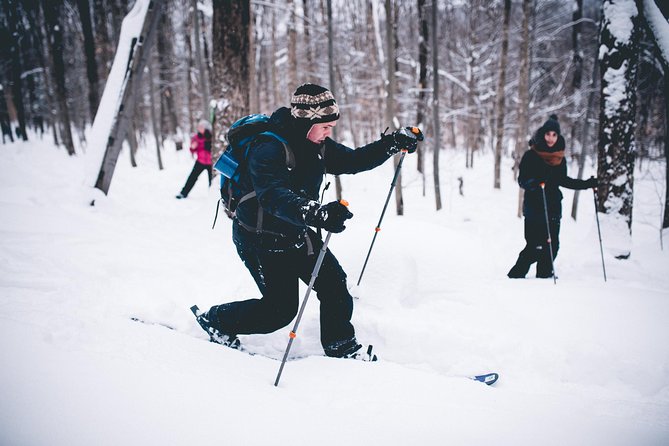
After the refuge, the route enters a more technical area. This is where the activity shifts from basic familiarization to real skill practice.
You work on rising and descending with a telemark-type movement. Going uphill requires controlled steps and steady effort. Going downhill asks for balance and confidence. The shorter skis help you manage forest conditions, but they do not remove the need to bend your knees and keep your weight under control.
This section explains why the tour earns different descriptions from different people. The park setting may look peaceful, but the activity can be athletic. You might slip, fall, or need several attempts to manage a slope. That is normal for a beginner, but it can be frustrating if you expected a relaxed sightseeing excursion.
Your guide remains close to the process. The strongest practical benefit is not speed. It is the chance to learn safely enough to keep going. Guides have been praised for helping participants one step at a time, including older people who began the outing feeling nervous.
You should not feel embarrassed about falling. Wear clothes that can handle snow and moisture, and keep spare warmth in reserve. Once you stop worrying about looking graceful, the activity becomes much more fun.
The return through the snowy woods
After the technical practice, you return to the starting point. By now, the equipment should feel more familiar, even if you are still working hard.
The return is not just a repeat of the first section. You have had time to improve your balance, so the same sort of terrain may feel more manageable. It also gives you another chance to take photographs. The forest is the main visual reward, with quiet snowy paths and broad views through the trees.
The tour operates in all weather conditions, provided there is enough snow. That means the day can feel very different depending on temperature, snowfall, wind, and trail conditions. Snowfall can make the forest feel magical, while a mild, still day may offer better comfort and visibility.
If snow is insufficient or weather makes the activity impossible, the tour may be canceled. You will be offered another date or a full refund. This is a sensible condition for a snow-based excursion, but keep it in mind if you have a tightly fixed Quebec City schedule.
Is $119.14 a fair price?
At $119.14 per person, the value is good if you want a guided winter activity rather than simply renting equipment. The price includes transport, professional instruction, all necessary equipment, lunch, a hot beverage, taxes, fees, and handling charges.
The instruction is the key value. Without a guide, Hok skiing could quickly become a frustrating attempt to stay upright. Here, you get help selecting and adjusting the gear, learning the movement, and handling more difficult sections.
Transport also matters. You do not need to arrange your own route to Jacques-Cartier National Park or rent a vehicle for the day. The excursion takes roughly seven hours from city departure to city return, with about four hours of guided activity.
The price does not include winter clothing. If you already have a proper coat, boots, gloves, and layers, that is a minor issue. If you are visiting from a warm climate and need to buy or rent cold-weather gear, budget for that separately.
The 4.9 rating from 22 reviews and 100 percent recommendation indicate very strong satisfaction, but the comments also point to the main warning: difficulty. The value is strongest for someone who wants to learn a new winter sport and spend active time outdoors. It is weaker for anyone seeking passive sightseeing.
Who should book this outing?
I would recommend it to active adults, couples, friends, and families with older children who want an unusual Quebec winter experience. It is particularly suitable if you have tried skiing, snowshoeing, or another activity requiring balance, but previous experience is not required.
You should have a moderate level of physical fitness. You do not need to be an athlete, but expect a workout. The activity includes walking and skiing through snow, climbs, descents, and repeated attempts to learn new movements.
I would think twice if you have mobility issues, dislike falling, or want a calm nature walk. The setting is peaceful, but the sport is not always gentle. One family described it as beautiful and athletically demanding, which is a fair way to frame the choice.
The patient teaching makes this a strong option for beginners. Guides including Levi, Lorenzo, Vicky, Alex, and Johann have been praised for their care and encouragement. Still, a good guide cannot remove the physical demands of snow travel.
Practical booking details and cancellation
You can cancel for a full refund up to 24 hours before the local start time. Changes or cancellations inside that 24-hour window are not accepted for a refund.
The activity requires favorable snow conditions and a minimum number of participants. If poor weather, insufficient snow, or low participation cancels the outing, you will be offered another date, another experience, or a full refund, depending on the situation.
Confirmation arrives within 48 hours, subject to availability. Since winter demand is high and the outing averages booking 36 days ahead, reserve early if your Quebec City dates are fixed.
Should you book Hok skiing in Jacques-Cartier National Park?
Book this if you want to learn a distinctly Canadian winter activity, enjoy forest scenery, and do not mind working for the experience. The included equipment, meal, hot chocolate, transport, and patient instruction make the $119.14 price reasonable.
Skip it if you want a simple snowshoe outing or have limited mobility. Hok skiing asks more of you than an ordinary winter walk, especially on the technical section.
For the right person, this is a memorable half-day outside Quebec City. You return with snowy forest photos, a new skill, and a better idea of how much effort can hide inside a peaceful winter afternoon.
FAQ
Is Hok skiing the same as snowshoeing?
No. Hok skiing combines elements of cross-country skiing and snowshoeing. The tour specifically teaches Hok skiing, not a standard snowshoe walk.
How long does the full excursion take?
The full schedule runs from about 9 a.m. until 4 p.m. The guided activity lasts about four hours, from approximately 10:30 a.m. to 2 p.m.
Where does the tour begin?
The listed meeting point is the Centre Infotouriste de Québec, 12 Rue Sainte-Anne, Québec, QC G1R 3X2, Canada. The listed start time is 9 a.m.
Is pickup available?
Pickup is offered. Confirm the exact pickup arrangement after booking, since the listed starting point is the Centre Infotouriste de Québec.
What is included in the price?
The price includes an air-conditioned vehicle, professional guide, all necessary equipment, lunch, a vegetarian lunch option on request, a hot beverage, taxes, fees, and handling charges.
What should I wear?
Wear winter clothing, a warm coat or jacket, a hat, gloves, and several layers. Hiking boots, leather boots, or sneakers are listed as suitable footwear. Hand and foot warmers can help in cold conditions.
How fit do I need to be?
You should have a moderate level of physical fitness. The tour includes skiing through snow, climbs, descents, and technical practice. It may not suit young children or people with mobility issues.
What happens if there is not enough snow or the weather is poor?
The tour may be canceled if snow conditions are insufficient or the weather is unsuitable. You will be offered an alternative date or a full refund.
Just added around Canada
- Whistler Premium Snowboard Rental Package★ 5.0 · 3 reviews
- Montreal Epic Ski Adventure in Quebec’s Winter Wonderland★ 4.0 · 5 reviews
- Banff Performance Ski Rental Including Delivery★ 5.0 · 10 reviews
- Learn to Cross Country Ski in Lake Louise★ 5.0 · 2 reviews
- Lake Louise: Cross Country Skiing Lesson with Tour★ 4.9 · 7 reviews
- From Toronto: Blue Mountain Day Trip Skiing Snowboarding★ 4.0 · 4 reviews
- Whistler Development Snowboard Rental Package★ 5.0 · 7 reviews
- Montreal: Guided Skiing in Quebec Forests★ 5.0 · 12 reviews
National Parks, compared.
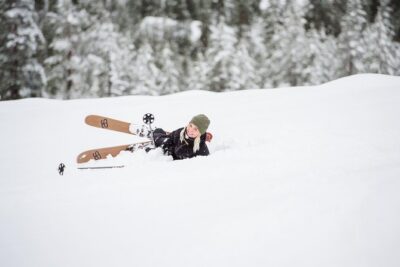
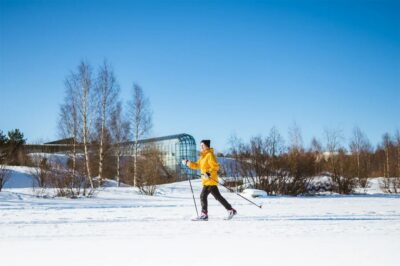
Classic Wilderness Skiing in the Pyhä-Luosto National Park
Read our review →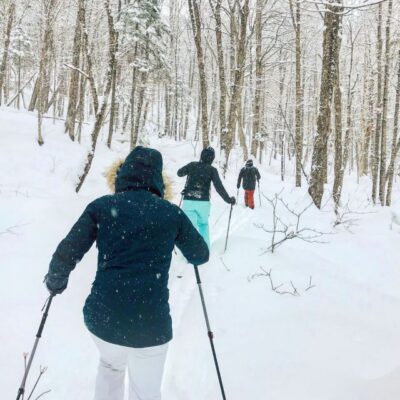
Jacques-Cartier National Park: Skiing Excursion
Read our review →
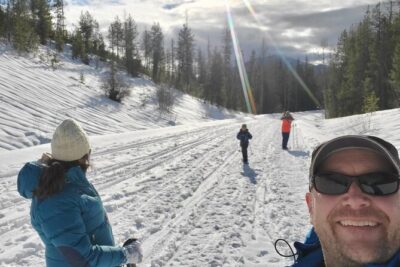
Snowshoe OR Cross Country Ski Tours in Glacier National Park
Read our review →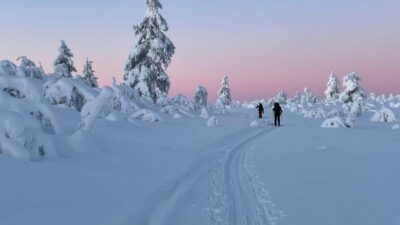
Ylläs: Guided Nordic Skiing Tour in Lapland Wilderness
Read our review →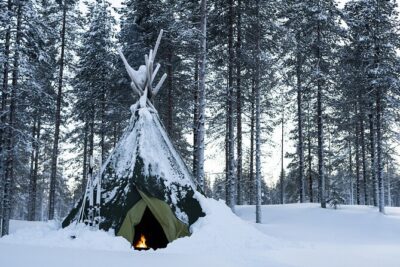
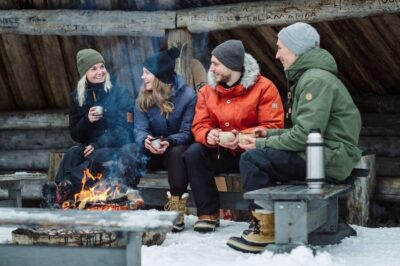
Pyhätunturi: Try Wilderness Skiing in Finnish Lapland
Read our review →Browse the lists this tour appears in